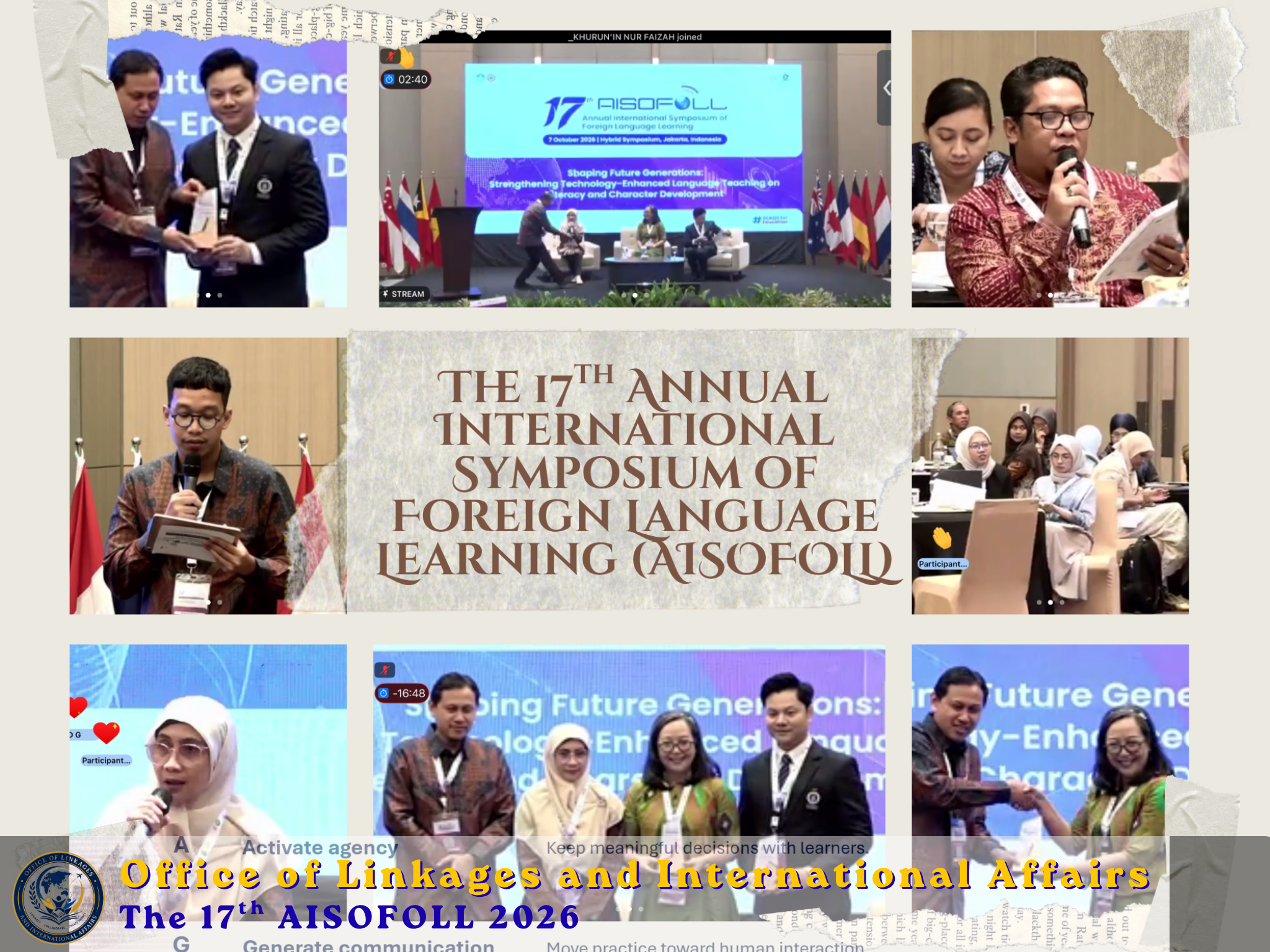
Bago City College (BCC), Philippines, through the Office of Linkages and International Affairs (OLIA), participated virtually in the 17th Annual International Symposium of Foreign Language Learning (17th AISOFOLL) on October 7, 2026. The international symposium was held in hybrid mode at Hotel Rà Suites Simatupang in Jakarta, Indonesia.
Selected to represent Bago City College were Charry Maguad, Khycy Janz Llorente Alvarez, Liezl L. Medado, Philip John Moreno, and Gracejoy Pantillo Florentino. The five OLIA members joined the symposium virtually and represented the College alongside educators, researchers, practitioners, and participants from various institutions and countries. Their names and Bago City College are included in the official list of participants from the Philippines.
Organized by the SEAMEO Regional Centre for QITEP in Language (SEAQIL), the symposium carried the theme “Shaping Future Generations: Strengthening Technology-Enhanced Language Teaching on Literacy and Character Development.” The event focused on the role of technology, literacy, and character in preparing learners for the changing demands of education and the continuing development of digital technologies.
The 17th AISOFOLL provided a platform for teachers, education personnel, researchers, and language practitioners to share research findings, good practices, and perspectives on emerging issues and trends in language education. The program featured a special session, plenary sessions, and parallel presentations covering topics related to technology, literacy, character development, and language learning.
One of the key discussions focused on the responsible and purposeful use of artificial intelligence in education. The session “Human Judgment First: Deciding When and How to Use AI in Language Education” emphasized that AI should be used based on instructional goals and learner needs. It also highlighted the importance of meaningful language production, critical and creative thinking, privacy, accuracy, and academic integrity.
Another session, “From Smart Tools to Thoughtful Learners: Designing Technology-Enhanced Language Learning for Literacy, Agency, and Character,” introduced the SAGE framework, which stands for Scaffold Learning, Activate Agency, Generate Communication, and Evaluate Ethically. The framework encourages educators to use technology as a support for learning while ensuring that students remain active participants in thinking, communicating, and making decisions.
The symposium also presented practical approaches to the responsible use of AI in learning. Discussions emphasized the importance of allowing students to develop their own ideas, evaluate information and evidence, reflect on their decisions, and remain accountable for their work even when using AI tools. This reinforced the idea that technology should support human thinking rather than replace it.
Other discussions explored literacy and character development, responsible technology use, digital learning, and approaches that can help learners communicate and participate effectively in an increasingly digital environment. The symposium also emphasized the importance of developing learners who can engage critically with information and act responsibly when using digital resources.
Through its participation in the 17th AISOFOLL, Bago City College, through the Office of Linkages and International Affairs, continues to strengthen its international academic engagement and expose its personnel to current perspectives and practices in education.
The experience provided the BCC representatives with valuable insights that can be shared and applied within the College, particularly in promoting responsible technology use, critical thinking, digital literacy, and meaningful learning.
BCC’s participation in the international symposium reflects the College’s continuing commitment to professional growth, knowledge sharing, and meaningful international engagement while supporting relevant and responsive education in a rapidly changing digital environment.